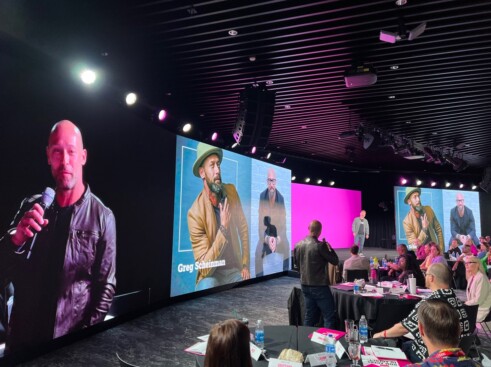




The first thing I noticed about Drew Ramsey is his voice; deep, serious, commanding. It immediately makes you think he’s all business. And while Drew is a highly educated, articulate, and intelligent doctor tackling some very serious work in the world of mental health, and nutritional psychiatry (we talked a lot about food…) what struck me is how laid-back and normal he is. He’s conversational, sometimes even slightly profane; in the best way possible, a good man-to-man kind of way.
I found him to be relatable, extremely credible, and aspirational. Here’s a guy who’s followed his own path, relocating from New York to Jackson, Wyoming, working on his own personal challenges, growth, and well-being, while practicing what he preaches. There’s something powerful about people like Drew who can take very serious, often complicated subjects and break them down into something guys like me can actually use. I don’t tend to gravitate toward science-heavy conversations or get lost in the weeds of clinical research. What I enjoy, and what Drew does so well—is giving you the Cliff Notes. It’s like being at a keynote and, when the Q&A comes, someone asks, “Okay, just give me the three things I can do today that will actually help.” That’s what Drew delivers. Simple (and I’ve got an entire viewpoint on simplicity this week). Practical. Actionable.
Drew Ramsey, MD, is a board-certified psychiatrist, psychotherapist, and author. His work focuses on evidence-based integrative psychiatry, Nutritional Psychiatry, and male mental health. He founded the Brain Food Clinic, a digital mental health practice, and Spruce Mental Health in Jackson, Wyoming. Using the latest research along with decades of clinical experience, he helps people improve their mental health and build resilient mental fitness.
Dr. Ramsey is also a leading advocate and compelling voice in the field. He co-hosts Men’s Health’s Friday Sessions with Gregory Scott Brown, MD, and has delivered three TEDx talks, a Big Think video series, and appeared in the BBC documentary Food on the Brain. His work and writing have been featured on The Today Show, CBS Sunday Morning, The New York Times, The Wall Street Journal, The Atlantic, TIME, NPR, and Lancet Psychiatry.
Watch the full interview here:

‘How I See It’ with Dr. Drew Ramsey:
On Mental Fitness: “Mental fitness is not just about not having a mental health problem or being in therapy. It is about giving our sons and ourselves the fundamental information and science to care for and protect mental health. It involves action, not just awareness.”
On Self-Awareness: “A man has to enter life with curiosity and self-awareness or you have no idea who you are. Many men run on someone else’s narrative of what a man is supposed to be, without understanding themselves. Self-awareness is a huge missing part of masculinity.”
On Food and Brain Health: “Nutritional psychiatry is the use of food to optimize brain health and treat and prevent mental health concerns. What we eat is central; the brain is the most metabolically demanding organ and needs the right fuel. I always ask my patients what they eat and how they relate to food.”
New to Midlife Male? Sign Up Now for Free
On The Power of Routine: “Most days, I wake up early, make coffee, spend time with my family, and see patients. A solid routine grounds me and provides moments for connection, reflection, and purpose. Routines do not need to be complicated or extreme, just consistent and intentional.”
On Simplicity and Sustainability: “Complicated things are not sustainable. Figuring out a routine that is simple and works for you, something you can maintain day-to-day, is far more valuable than chasing trends or extremes. My approach is to keep things straightforward and focused on what really matters.”
On Male Community: “There is an unbreakable bond between men, when men get together, move their bodies, and connect, it’s powerful for mental health. We need more safe spaces for men to talk, support each other, and just show up. Our society needs to create more of these opportunities.”
On Action vs. Awareness: “Awareness doesn’t do anything unless you take action. Everyone can be aware of a problem, but without acting, nothing changes. Mental health requires doing something, not just thinking or talking about it.”
On Prevention in Mental Health: “The treatment side of psychiatry is vital, but prevention is the holy grail. Prevention means being with people before there is illness. With young men, this might mean changing their diet, supporting healthy routines, and making mental health a daily focus.”
On Modeling Healthy Living: “Our kids see what we do. If you want your children or those you care about to be mentally fit, you must model those behaviors, not just talk about them. Actions will always speak louder than words in parenting and mentorship.”
On Boundaries and Growth: “A big part of masculinity is learning to create healthy boundaries. Part of my pleasure as a man is to create structures and frameworks for others to grow within. It’s essential for men to feel empowered to do this.”
On Joy, Fun, and Engagement: “A lot of middle-aged men are not having much fun anymore, and fun is a serious matter for mental health. We need to prioritize genuine, healthy hobbies and engagement, not just default to outdated routines or numbing behaviors. Engagement and movement bring joy and connection.”
On Masculinity’s Arc: “Masculinity is not static; it changes throughout life. There is not enough understanding of the masculine journey from one’s 20s through to one’s 70s. We need to consider how our strengths and challenges evolve.”
On Meaningful Connection: “As a therapist, I see how men crave connection and can be extremely loving, supportive, and loyal. Shared experiences, like a book club, physical activity, or simply talking, build trust and resilience. We need more spaces where men can connect meaningfully.”
On Choices and Consequences: “Our choices in food, routines, and relationships shape our health and happiness. Making better choices is often simple but not always easy. Every day is a new opportunity to choose what serves our well-being and purpose.”
On Embracing Change: “Making big life changes doesn’t have to be all or nothing. Sometimes, it is about dipping your toe in, exploring new places or routines, and gradually finding what fits. Flexibility and small steps are key to positive transformation.”
On Success and Enough: “Success should not only be defined by more or bigger: more money, more clients, more accolades. There is power in being small and simple. For me, a good day might just mean good coffee, meaningful work, and being present for my family.”
On The Limits of Comparison: “It is easy to feel like you are losing when you compare yourself to others with bigger houses or louder platforms. But we are each running our own race. Chasing what someone else has often leads to anxiety and disconnection from our own values.”
On Vulnerability: “Vulnerability is not about sharing everything with everyone. It is about having self-awareness and being able to express powerful feelings when necessary. True vulnerability is grounded in knowing yourself and acting authentically.”
On Purpose and Process: “Purpose is not something you find and then build; it emerges as you engage, create, and love. The process is more important than a single spark of passion. Over time, consistent actions and engagement reveal your true purpose.”
On Giving Yourself Grace: “It is important to be kind to yourself and recognize what you have accomplished. There will always be someone ahead, but self-acceptance and humility are vital. Kindness toward yourself is as important as kindness to others.”
On The Power of Small: “There is great richness, spiritual fulfillment, and depth in being simple and small. More is not always better. Sometimes, becoming smaller allows us to find quiet, presence, and meaning that gets lost in the pursuit of bigger and more.”
In Health,


midlifemalmidli
femalemidlif
Greg Scheinman
Founder, Midlife Male
52. Husband. Father. Entrepreneur. Coach.
Follow me on LinkedIn, and Instagram
midlifemal
midlifemale
midlifemal
Join 35,000+ driven men over 40 getting free weekly advice on maximizing their health, wealth, and fulfillment in midlife. Subscribe here.