
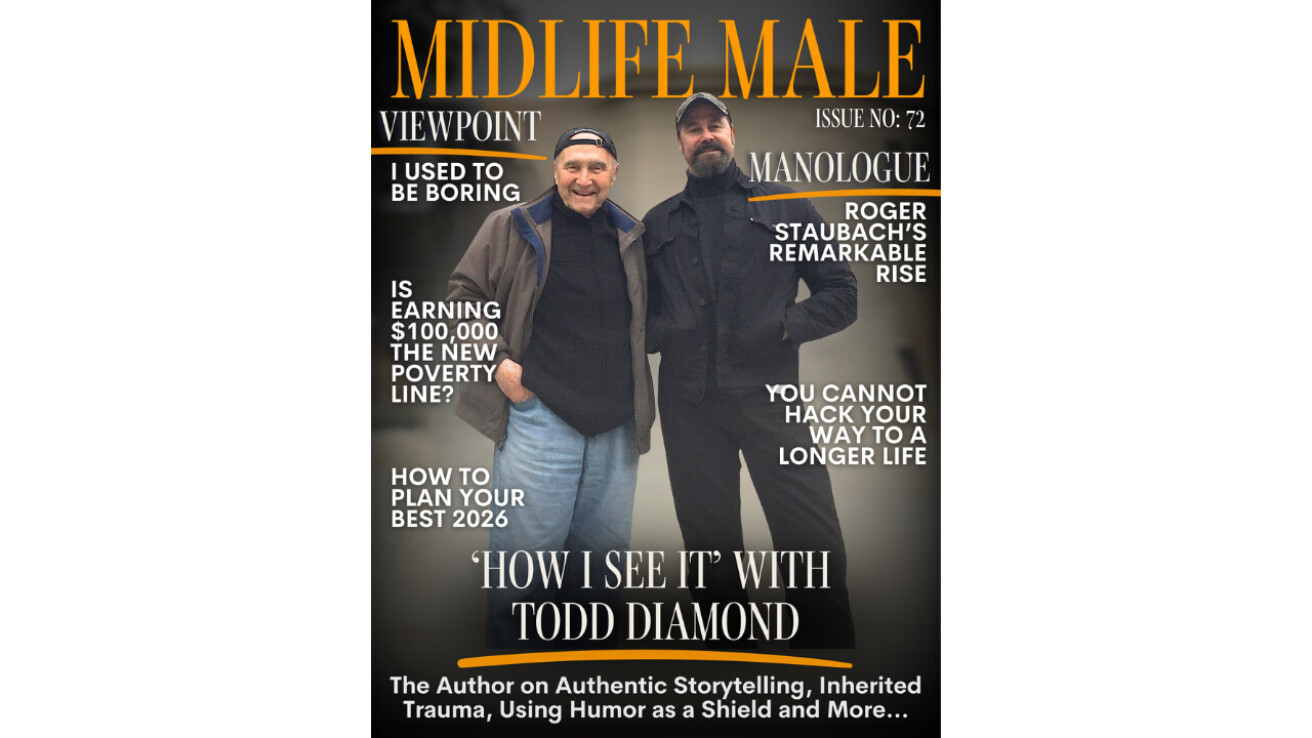

I got an email from a publicist, which I almost never respond to, about interviewing Todd Diamond, the author of Pass the Trauma, Please – a book about the Holocaust. And my first reaction was: this sounds like a downer.
As a Jew, I’m proud of my heritage, I’m not religious, but I’m deeply aware of what’s going on in the world and the rise in antisemitism. Did I really want to step into this? Did I want to use my platform for something that could be so heavy? But something in me said ‘yes’. Maybe because Todd’s book isn’t what you expect.
It’s a comedy-drama memoir that approaches one of the darkest chapters in Jewish history in a totally unorthodox way. At its core, it’s a story about a son trying to honor his father. A son who wanted to share his dad’s Holocaust story—not as pure tragedy, but as a mix of love, loss, laughter, and legacy.
Todd and I got into the deep stuff during our conversation too: the intergenerational effects of trauma, his personal experiences, his father’s experiences, and how his first draft went so far off the rails his dad basically said, “What the fuck is this? Make it sound like us.” And he did.
The conversation was honest and unexpected, and I’m genuinely glad I agreed to it. And I’m glad I read the book. Because if you want people to remember important, painful history (if you want them to actually engage with it) you have to meet them where they are. Todd met me exactly where I am. This is the kind of book about this subject that I would want to read, in the way I’d want to read it. So enjoy this interview. You’ll learn a lot about Todd, and I encourage you to watch, listen, and pick up a copy of Pass the Trauma, Please. It’s really good.
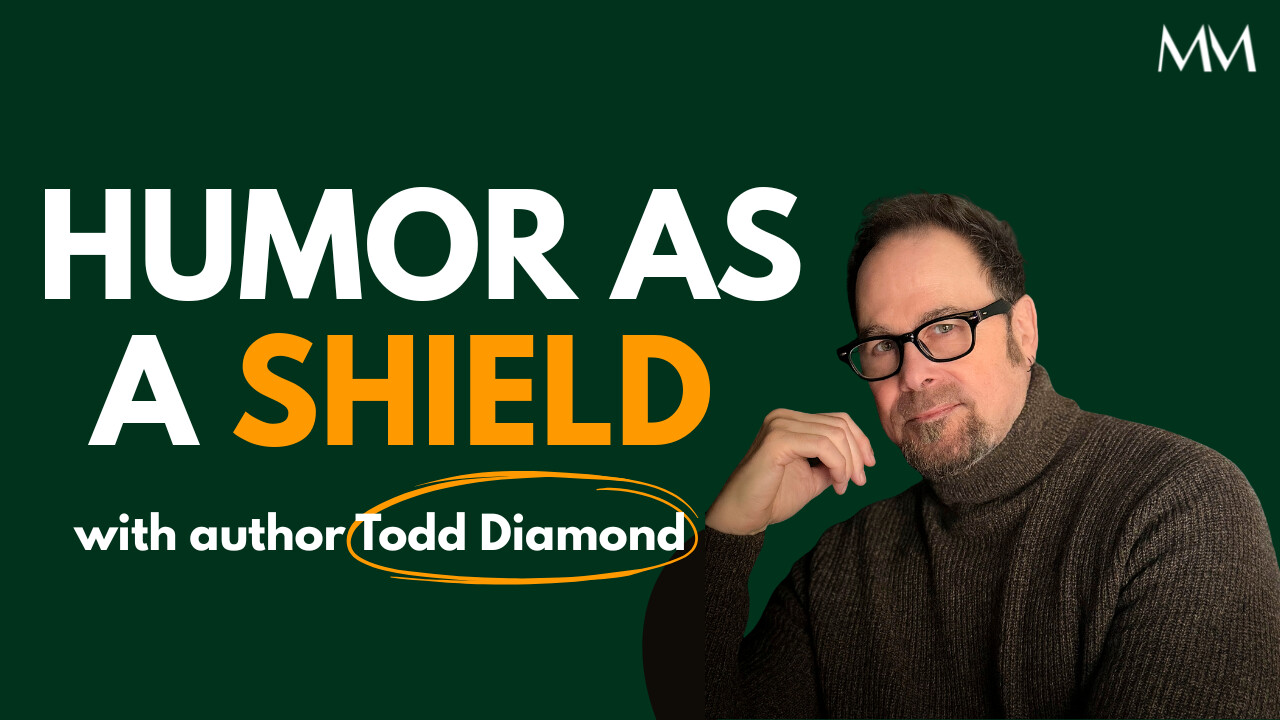 Watch the Full Interview Here
On Legacy and Urgency: “I’m at that stage where you start thinking about your legacy, and what you are going to leave behind. There’s that mortality clock ticking, realizing your parent may not have much time left. The most important thing for me was to physically place a published book into my father’s hands for his 92nd birthday.”
On Authentic Storytelling: “My father rejected the early manuscripts because they were overly sentimental and fawning. He wanted me to write our story in our real voice, with all the honesty and messiness that comes with it. That was a powerful motivator, to make sure it sounded like us.”
On Humor as a Shield: “My father used humor as a moat, and as a wall to keep the horror away from us. I admire that he was able to find a little bit of light in unbearable darkness, no matter what it was. Even though trauma, banter and laughter helped us get on.”
On Family Banter: “When my brother, my father, and I get together, the banter is pretty wild. We don’t hold anything back. No matter how heavy things get, whether it’s my divorce, my brother’s addictions, or my own, we find a way to laugh about it and mock one another’s weaknesses and flaws.”
On Inherited Trauma: “I carry this constant presence of death and mistrust and vulnerability and a sense of duty to never forget. My identity is shaped by the trauma of systematic genocide, even though I never lived through the Holocaust. That sense of inherited anxiety is always humming in the background.”
On Responsibility to Remember: “Our parents’ generation believed that if they just kept their heads down and worked hard, everything would be okay. But I’ve realized that we are never really safe, only sometimes safer, for some periods of time. It’s our responsibility to acknowledge both the freedoms we enjoy and the anxieties we inherit.”
On Speaking Out: “The alternative of remaining silent does not keep us safe, it kind of makes us complicit in our own erasure. It’s more important than ever to speak out in your own way and on your chosen platform, whatever it is that makes you comfortable. You just have to say something, even if it’s imperfect.”
New to Midlife Male? Sign Up Now for Free
On Writing with Humor: “I had these lengthy sections with statistics and data, and my editor told me, ‘Get that out of here, you’re slowing down the story.’ So I rewrote everything to make it more accessible, more approachable, to combat Holocaust fatigue. Humor became essential to keep the engagement high and reach younger audiences.”
On Overcoming Self-Doubt: “There was so much self-doubt about whether I could even get those words out of my notes app onto a page. If I blow this, if I don’t get to tell my father’s story, I failed as a son, and especially as a Jewish son. That insane pressure made me take risks I might not otherwise have considered.”
On The Value of Risk: “To get the courage to jump into the abyss and risk the failure and potential embarrassment… I started out not telling anyone I was writing a book. I would never have shared that in case I failed miserably at it. But having an opportunity, you have to take that leap or be riddled with regret.”
On Balancing Responsibilities: “I was really trying to do a startup and a memoir at the same time. There’s always the pressure you put on yourself thinking you can do it all at once. If I didn’t get it done right now, with everything happening, I was never going to get it into the hands of my father.”
In Health,

midlifemalmidli
femalemidlif
Greg Scheinman
Founder, Midlife Male
52. Husband. Father. Entrepreneur. Coach.
Follow me on LinkedIn, and Instagram
midlifemal
midlifemale
midlifemal
Join 35,000+ driven men over 40 getting free weekly advice on maximizing their health, wealth, and fulfillment in midlife. Subscribe here.