

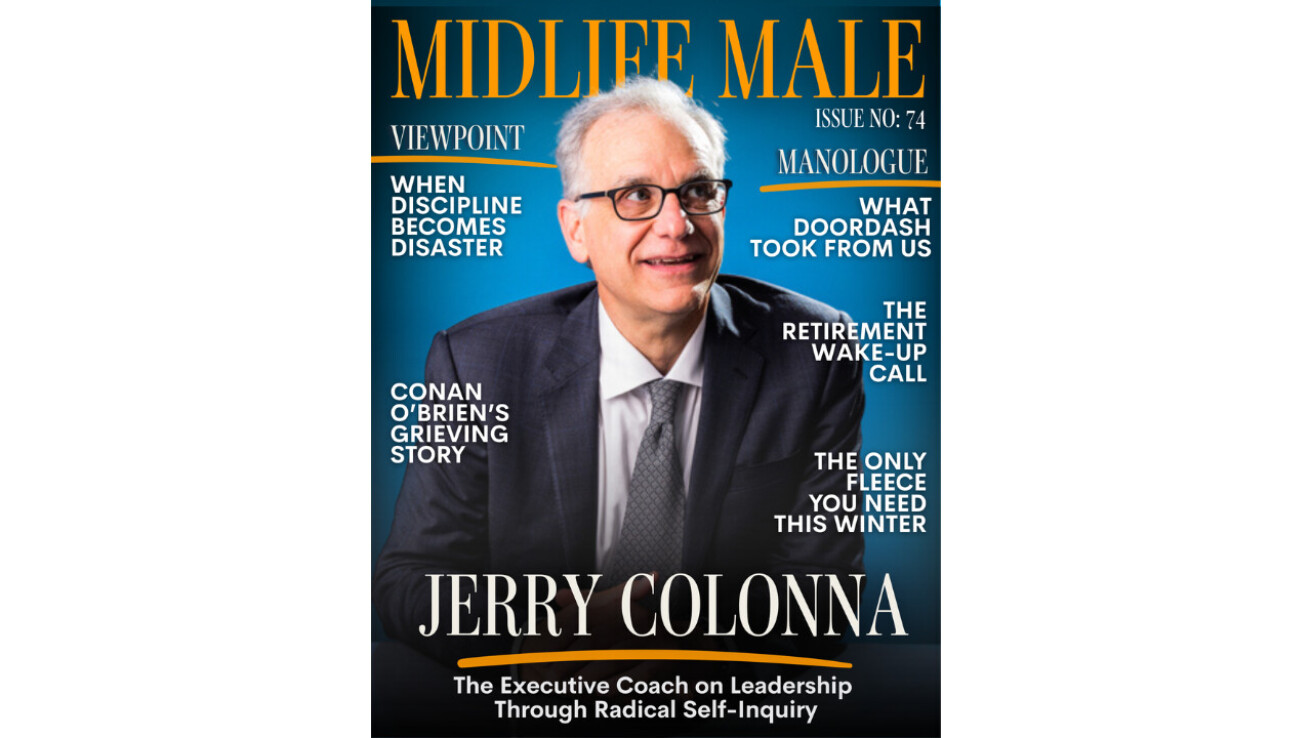

This week’s episode of How I See It is one of those conversations that stays with you long after you close your laptop or take out your earbuds. It’s with Jerry Colonna, the founder of Reboot and the author of the book Reboot, and it’s centered around something most of us have never really stopped to examine: what it means for our work and our lives to be non-violent.
Jerry has spent more than 20 years exploring the idea that work shouldn’t destroy us. It shouldn’t erode who we are. It shouldn’t damage our relationships or our sense of self. It shouldn’t chew us up physically, mentally, emotionally, or spiritually. And when he says “non-violent,” he’s not talking about confrontation or conflict – he’s talking about the subtle, slow, everyday kind of harm we inflict on ourselves without even realizing it. The pressure. The expectations. The self-judgment. The chasing. The belief that our worth is measured in accomplishments, titles, applause, or whatever we’ve convinced ourselves we’re supposed to be building.
We dove into what non-violence in work actually means, and what it looks like to practice it. And from there, the conversation unfolded into this honest, vulnerable, sometimes uncomfortable look into how we grow up as men, how we define success, how we inherit stories that don’t serve us, and how we pass those stories on unless we consciously choose not to.
Jerry shared his own midlife unraveling and rebuilding. I shared mine. That part of realizing you’ve created a life that looks good on paper, but feels empty on the inside. That question of whether it’s the system that’s broken or whether it’s you – or whether it’s both at the same time. That tension between gratitude and dissatisfaction. The guilt that comes with wanting more when you already have “enough.” And the honesty required to admit you might have played a role in creating the circumstances you say you never wanted.
We also talked about our kids, about what it means to model growth instead of perfection, and about how becoming a father, and recently a grandfather in Jerry’s case, forces you to see the world and your choices differently. There’s a moment in the conversation where we talk about release instead of reinvention, letting go of the things that keep you small, instead of trying to become some new, shiny, optimized version of yourself. That landed for me. Hard.
What I admire and respect about Jerry, is that he’s not preaching. He’s not promising a five-step plan. He’s inviting us into a different way of being; the kind that starts with radical self-inquiry and a willingness to ask the hardest question of all: How have I been complicit in creating the conditions I say I don’t want?
That’s the work. That’s midlife. That’s what we’re all trying to figure out here.
So if you’re in a season where things feel off, where you’re questioning your direction or your identity or the cost of the life you’ve been living… or if you’re just curious about how to grow without burning everything down, this conversation is worth your time.
Here it is, my conversation with Jerry Colonna. I hope it hits you the way it hit me.
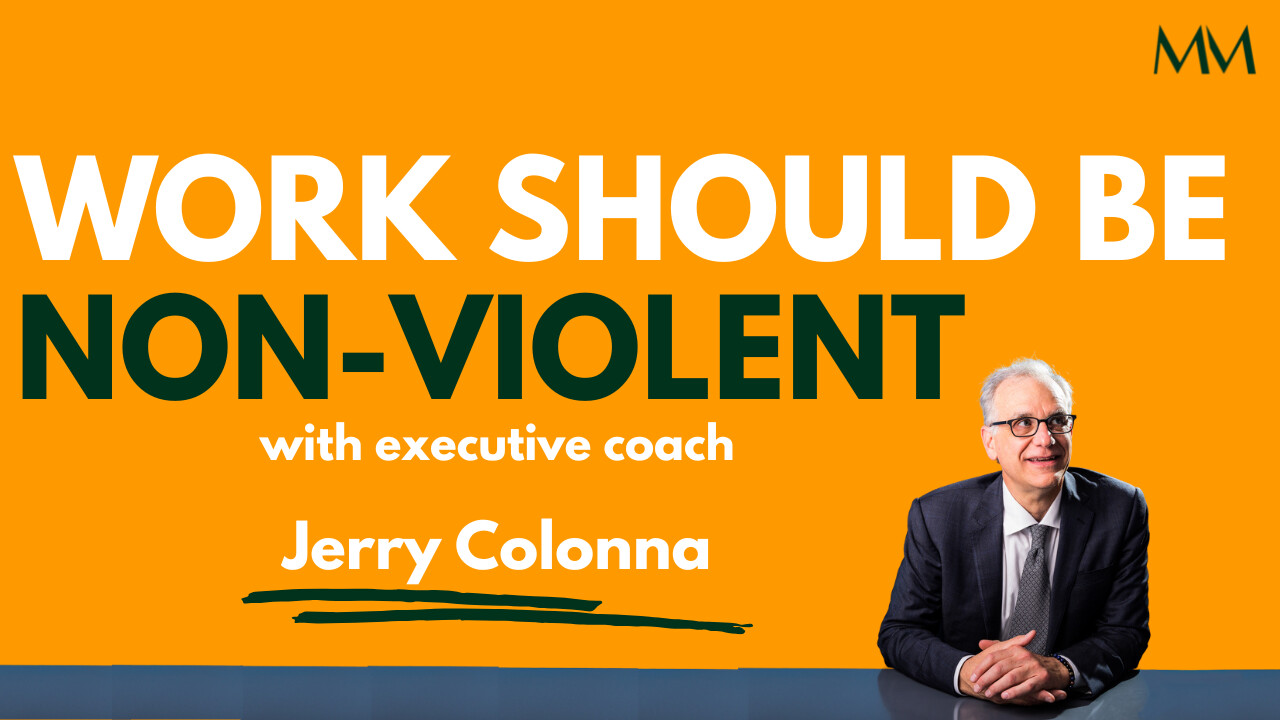
On Work and Nonviolence:
“When I talk about violence at work, I do not mean physical violence. I’m talking about a slow violence where people bypass their own growth and end up in a depressive state. Work should be nonviolent to the self, nonviolent to the community, and nonviolent to the planet.”
On Legacy of Suffering:
“My teacher, Parker Palmer, says violence is what we do when we do not know what to do with suffering. When we are working through childhood wounds and given power, we often create violent systems at work. We must learn better ways to be with suffering.”
On the Hidden Toxicity of Workplace Culture:
“I once encountered a company that had meditation rooms in every building, but if you actually used them, you got fired. The outward signs of wellness mean nothing if asking for help is punished. This is how harmful systems perpetuate themselves and hurt not only employees but their families as well.”
On Individual and Systemic Change:
“You can change a system only when the individuals in that system, especially those with power, are open to change. System change happens at the individual level, and that is the only way real change happens. We have to push back, even if it risks our own comfort.”
New to Midlife Male? Sign Up Now for Free
On Socialization and Masculinity:
“We socialize boys to link success and self-worth with accomplishment. Somewhere in midlife, many men wake up and ask, ‘What happened to my life?'”
“Often, men follow paths their fathers or grandfathers did, promising themselves they would not, but finding themselves trapped anyway.”
On Depression Among Men:
“Depression is the number one cause of death for men aged 35 to 60. It is vital that we talk openly about mental health, acknowledge suffering, and create space for vulnerability.”
On Complicity and Self-Inquiry:
“My most famous question is: How have I been complicit in creating the conditions I say I do not want? Radical self-inquiry begins with honest reflection on our own role in both our struggles and our successes.”
On Modeling for Children:
“Our children learn much more from watching us than from listening to us. If you want your children to be able to ask for help and handle suffering, you have to show them how by your own actions and vulnerability.”
On Defining a Worthwhile Life:
“It is not failure that annihilates us; it is attaching our sense of self-worth to the accomplishment of a goal and then failing to achieve it. We must define not just a successful life, but a worthwhile life. That definition has to come from within.”
On Presence and Release:
“The unlived life is that part of you calling out, causing discomfort or unrest. Part of growing up is to allow those unlived parts to emerge and be released, so you can be more fully yourself. Reinvention is less important than release.”
On the Ripple Effect of Suffering:
“You are not going to prevent your children from suffering; nobody can. But you can give them words and show them compassion, so that suffering does not multiply. How you are with your suffering teaches them how to be with theirs.”
On Lifelong Becoming:
“Every day, I strive to become the ancestor my descendants deserve. Some days I move forward, some days I fall back, but growing up is a daily practice, not a destination.”
In Health,


midlifemalmidli
femalemidlif
Greg Scheinman
Founder, Midlife Male
52. Husband. Father. Entrepreneur. Coach.
Follow me on LinkedIn, and Instagram
midlifemal
midlifemale
midlifemal
Join 35,000+ driven men over 40 getting free weekly advice on maximizing their health, wealth, and fulfillment in midlife. Subscribe here.