

I stumbled into an analogy that helped me explain using (and resisting) AI to my teen son and it has to do with school essays, ChatGPT, shortcuts and push-up goals. I think you’ll find it useful as we enter this “hey, just have AI do it” wild west. Or you can tell me I’m wrong.
To start, my thirteen-year-old son has hit the age where he’s beginning to notice muscle and strength in that cool, young dude way. The kid never wears a shirt. He flexes in every window or mirror he sees. He eats mountains of calories every meal. It’s awesome to witness – like watching myself grow up in a way haha.
The flip side of that is he’s realizing that to get strong and build muscle, you have to, you know, workout and push yourself. It doesn’t just happen. You can’t snap your fingers and be jacked.
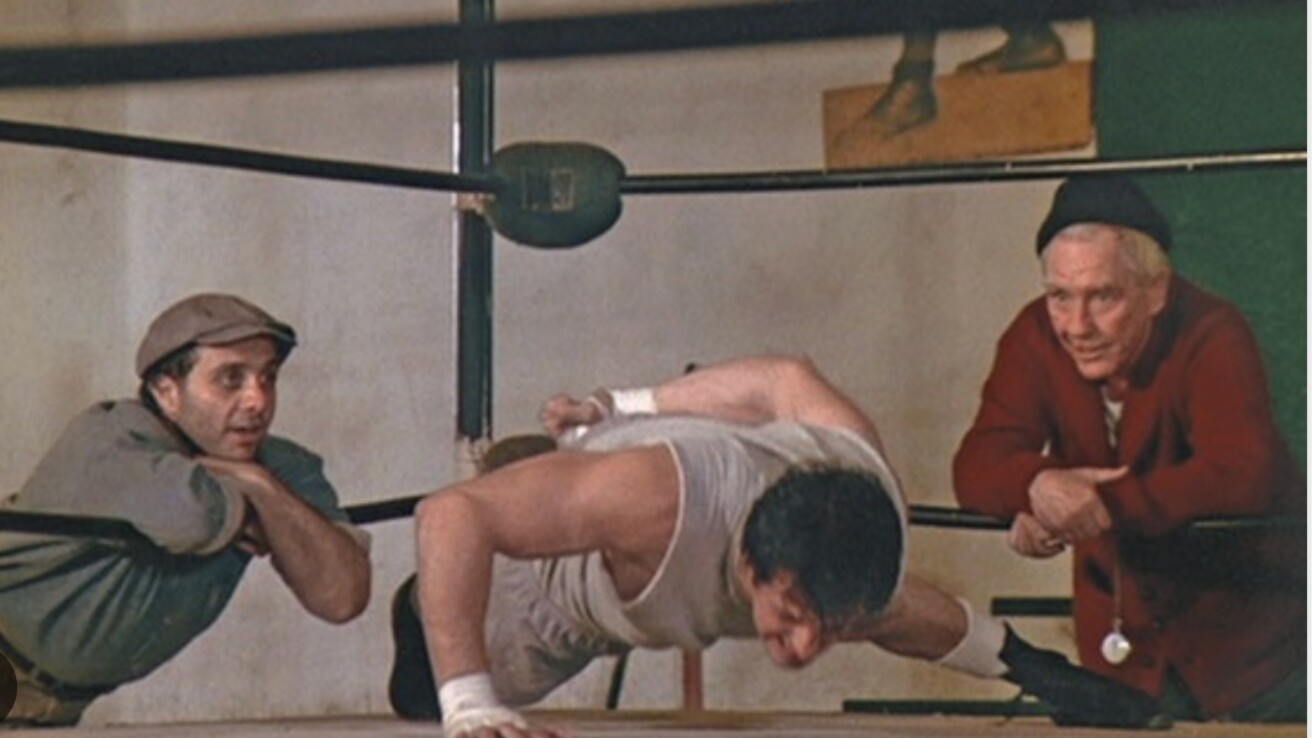
His goal since the summer has been to do 25 strict push-ups straight.
On his first attempt he did about eight (his form was terrible, though).
For a little background, he does a ton of push-ups several times a week at Taekwondo and has for years (which is why he wasn’t starting from zero), so on non-practice days he started with five sets of five push-ups (slow and strict, with perfect form) to where he now does five sets of fifteen or more.
And he can now do about twenty push-ups with great form and then he gets a little wobbly. He can “do” twenty five, but let’s just say a military man wouldn’t count them. But he’s getting there and he’s working hard.
He’s watched his shoulders round out. His deltoids thicken. The top of his chest broadened a bit. He’s noticed his triceps forming and just a general thickness to his upper body. And of course, strength. He’s able to shoot deeper threes. Throw a football farther. All that stuff. Most probably attributed to his growth spurts, but a decent percentage to getting stronger.
And this is where our conversation about AI and being a meathead merge, because on the brain side of things, my son has had several essays and papers due lately in school and he has to learn how to think and write all while ChatGPT beckons like a literary drug dealer.
Hey buddy. You need some words? C’mon. I can give you some words? C’mon. Just try one sentence. You’ll like it. I swear. You know what? I’ll just do the first paragraph and you do the rest. It’ll be our secret. Just tell me what you need. I got you…
Can you imagine if we had this option in middle school and high school?
New to Midlife Male? Sign Up Now for Free
What would it have been like to sit down at your boxy Apple IIc in the school computer lab or if you were lucky enough to have a giant IBM Aptiva desktop at home and instead of typing an essay, you could just tell some program to write it for you?
We’d have all tried it. Or at least dabbled in it until we got caught. How could we not? To a thirteen year old (or twenty-three or thirty-three or forty-three) year old, this sounds like heaven.
But there is a huge cost, which brings me to the push-up analogy I shared with my son.
The other day he was telling me about an essay he had to write for science and he mumbled, “I wish I could use ChatGPT and just be done.”
Like I said. What thirteen-year-old wouldn’t feel this?
But then I said to him:
“When you started doing push-ups, you couldn’t really do five good ones, right? Now you can do twenty. What have you learned?”
Of course, he told me the question was dumb and asked why he had to answer it and all the BS teen boys give before actually trying to think. Finally, he answered.
He told me he learned that the hand position mattered because if he put too much pressure on his shoulders he got tired earlier. He told me if his arms were too wide his chest got tired first. He told me that sometimes he felt the strongest on his last set and he realized he could do one or two more than he thought. He told me that if he took a few days off, he felt worse doing them. He told me some days he felt strong but couldn’t do as much as he thought. Other days he felt weak but surprised himself…
And on and on.
Basically, he learned all the lessons we all learn when we start lifting.
Then I said to him:
“Now imagine if after that first day of doing push-ups, where you barely got eight, I said to you, ‘Now just push this button. You’ll be able to do twenty five push-ups tomorrow.’”
He said, “That would be awesome!”
Then I asked, “Would it? Because if you pushed the button, you don’t put on any of the muscle or strength that you’ve been building up. It’s just a cheat code. It just means somehow you can do 25 push-ups.”
“Oh,” he said. “That sucks.”
“Yeah,” I said. “And you wouldn’t know any of the things you just told me. You wouldn’t even know HOW you got to twenty five push-ups. You’d just suddenly be able to do 25 push-ups. And if me, or anyone asked you how you worked your way up, would you be proud of your answer?”
He paused for a while, then said, “No. Not really.”
“Now imagine how good it’s going to feel when you earned your way to knocking out twenty five straight. Months and months of hard work. Pushing yourself. You’re going to feel amazing because you did it. Would you let a button take that away from you? The entire experience? All the muscle? The gun show? Gone because you wanted a shortcut?”
“No.”
“Buddy,” I said. “That button is ChatGPT when it comes to writing. Because writing is thinking. And if you let GPT write for you. Then you’re letting it think for you. And if a machine is thinking for you, your brain can’t get stronger. It’s like pushing that button to do 25 push-ups. Make sense?”
“Yeah,” he said.
Now, did I really get through to him? As any dad of a teen boy will tell you, who the hell knows? But I think so. I’m sure we’ll be talking about AI again and again in the world he’s growing up in.
One thing I do know is this:
For kids (especially teens) who are in the midst of developing their critical thinking skills and reasoning abilities and learning how to write essays to work their way through understanding the world around them, ChatGPT/AI is awful. It’s a substitute, unreliable brain without context. It’s disposable information. It’s a “do this for me” app that shortcuts hard work and struggle. It eliminates writing poorly and thinking poorly, which you have to do a lot of to learn how to write and think clearly.
Agree? Disagree? Hit me up.

midlifemale
midlifemale
midlifemale
Jon Finkel
Editor-in-Chief, Midlife Male
follow me on Twitter/X, Instagram, and LinkedIn.
Check out my latest books at jonfinkel.com
midlifemale
midlifemale
midlifemale