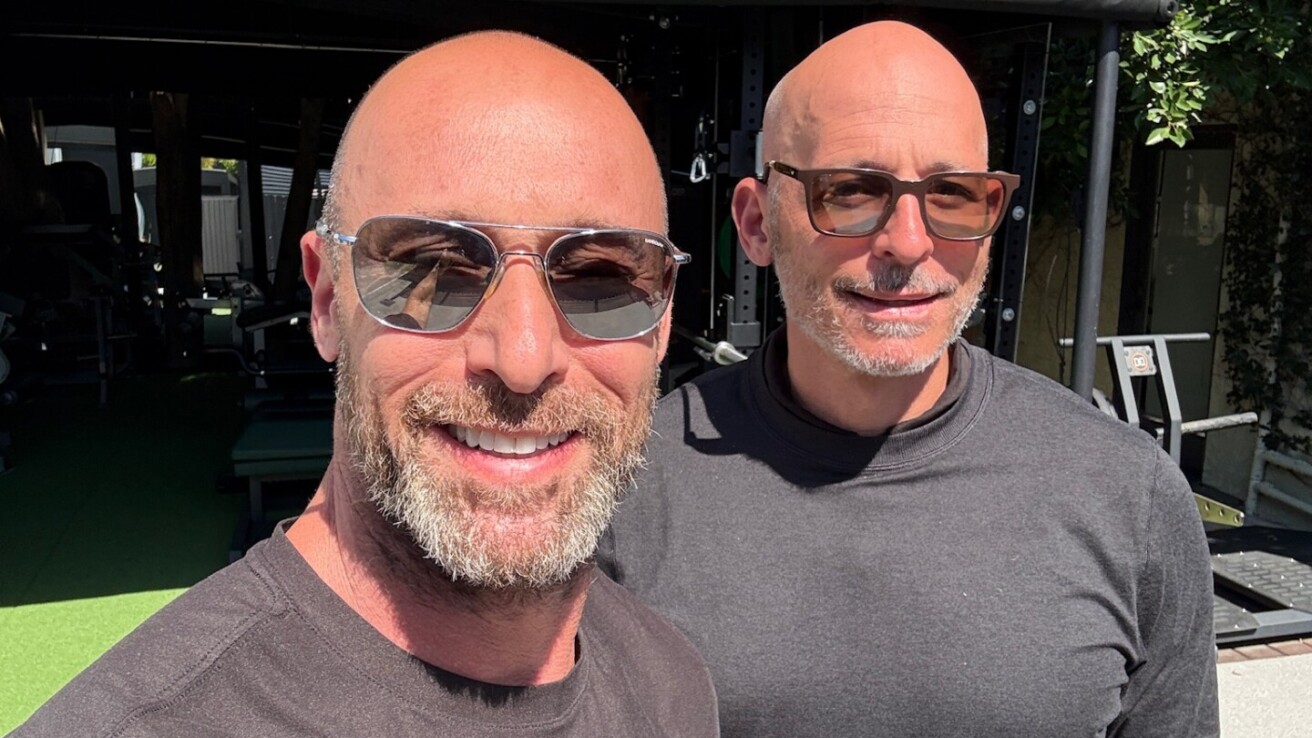

Earlier this summer, I spent a couple of weeks in Los Angeles with our oldest son.
He stayed out there after Loyola Marymount’s semester ended for a summer job, so we rented a small place in West Hollywood and settled into a rhythm that reminded me how much I enjoy this stage of fatherhood. We’d make breakfast together, drink coffee, then head off to our respective days. We’d reconnect over dinner, hike the nearby trails on weekends, wander Melrose, stop into Erewhon, and simply spend time together. As your kids get older, you realize those ordinary days become the ones you remember most.
One of the things I always try to do when I’m in a new city is meet someone I can learn from. I’ve told my boys this for years: some of the best opportunities in your life begin with a simple conversation. Every interesting person you admire has a story, a perspective or a lesson they’re willing to share if you’re willing to ask. That’s how I’ve learned most of what I know—not from books or podcasts, but from sitting across the table from people who’ve already walked the road I’m trying to navigate.
This time, I reached out to Harley Pasternak.
I’ve followed Harley’s work for years. He’s one of the most respected health and fitness experts in the world, but what I’ve always appreciated is how practical his approach is. He’s deeply educated without making fitness complicated. Everything he teaches revolves around sustainability, consistency and building a life you can actually maintain. Beyond that, he’s a husband and a father, and those conversations interested me just as much as the training.
So I sent him a message on Instagram.
He replied, sent me his email address, and we found a time to meet. As it turned out, his house was only about a mile from where we were staying, so one morning I walked over.
His property is exactly what you’d imagine—and then some. Down a long driveway sits an incredible training setup with a basketball court, turf for sled pushes, indoor and outdoor gyms, a sauna and a small office filled with books, certifications and decades of experience. He’s also a collector of vintage strength equipment, the pieces that have survived generations because they simply work. Everything had a purpose. Nothing felt trendy.
What struck me most, though, wasn’t the equipment.
It was Harley.
If you follow him online, you already know he’s a great source for training and nutrition advice. What you may notice just as often is how he shows up as a husband and father. Those roles aren’t separate from his work; they’re part of it. You get the sense that the same discipline he brings to fitness carries over into the rest of his life.
We spent a couple of hours talking about training, nutrition, longevity, family, business and everything in between. He walked me through his philosophy, showed me how he trains, and generously answered every question I had. I left with pages of notes, but more importantly, I left energized.
Experiences like that remind me that one of the greatest advantages we have as adults is access.
Most of the people you admire aren’t nearly as inaccessible as you think they are. Send the email. Make the introduction. Ask for the coffee. Reach out on Instagram. Some people won’t respond, but many will. In my experience, successful people are often remarkably generous with those who are genuinely curious and respectful of their time.
That’s one of the things I’m most proud of building with Midlife Male.
Every interview, every Excellent Adventure, every conversation starts the same way: reaching out to someone who’s living well and asking if they’d be willing to share what they’ve learned. Then we bring those lessons back to this community, because the fastest way to improve your own life is to learn from someone who’s already doing it well.
That’s an education money can’t buy.
Here’s some of what I got out of my morning with Harley Pasternak.
New to Midlife Male? Sign Up Now for Free
On Why Fitness Culture Overcomplicates Everything
“If you take a look at the number one lifestyle factors associated with mortality; number one’s obesity, that’s the number one cause that people die young or have health problems. Number two is smoking, number three is accidents, and number four is mental health and drugs. So I’m not obese, I don’t smoke, I don’t text while I drive, and I’m not a drug user, and hopefully my mental health is pretty good. You’ve now eliminated 95% of every death that you have any control over — maybe more.”
Harley’s training protocol is almost defiantly simple: 20-25 minutes a day, six days a week, alternating two major body parts plus a core movement, descending reps, no rest between sets.
“The workouts are always sub-30 minutes… even as a bodybuilder, that’s how I trained. I always train short workouts. I love it. It brings me joy.”
He doesn’t train biceps — ever.
“As men age, bicep tendonitis is one of the most common shoulder injuries. Ruptured bicep tendons, I’ve seen so many of them, just playing pickleball… I want to do the opposite, so I don’t do biceps.”
On the zone 2/ice bath/glucose monitor industrial complex:
“We live in this attention economy, and you have to say shit that sounds extreme or radical or different or new or novel… I’m a professor in exercise physiology, we don’t ever talk about zone two, zone three. That’s not something you’re using with clients… The popularity of ice plunging and extreme hot saunas, it’s not to say these are bad. They’re definitely not essential. You can live a very long, healthy, wonderful life without dipping yourself in freezing cold water.”
And on the wellness influencers selling suffering as a prerequisite for health:
“What they’re not telling you is they’re taking a plethora of pharmaceuticals for their own personal wellness journey that they’re not sharing with you, and they’re trying to make it seem like it’s accessible for everybody.”
His step philosophy follows the same logic, no intensity, no huffing, no special outfit required:
“I never run, I never huff and puff, I never sweat. I don’t want to do it with any intensity… If you look at the people who live the longest in the world, they’re not people doing wind sprints and interval training — they’re people that are always moving. They’re walking everywhere, they’re taking the stairs, they’re just staying in movement.”
On PATH: His Approach to Eating
Pasternak’s food philosophy is built around a simple acronym he uses with every meal:
“I created this acronym called PATH. Every meal: Palm of carbs, A is all the vegetables you want, T is a thumb of healthy fat, and H is at least a hand’s-mass of protein.”
A typical day: egg white French toast or oats with whey protein and berries for breakfast, a similar approach at lunch, and a savory dinner, usually fish or seafood, vegetables, and a carb like sweet potato.
“Big fan of carbohydrates.”
The through-line is the same anti-extremism that shows up in his training talk, no macro obsession, no all-or-nothing:
“So many guys now are struggling with this all-or-nothing — the tracking of the calories and the macros and the protein, everything, just majoring in all the minors.”
On Testosterone, Varicoceles, and Aging Honestly
Pasternak resisted TRT for years before starting it in his 50s, and the story behind why is one most men have never heard of.
“They wanted to put me on testosterone many, many years ago, and I said I’m too young, I’m going to have to take it for the rest of my life, and plus I want to have kids. What’s the mechanism? I don’t just have low testosterone, why?”
The answer, eventually, was a varicocele — a faulty valve in the veins running from the testes, which he had surgically repaired.
“So it’s a faulty valve in the vein… one of the main reasons that men have a drop in testosterone with age is they have a varicocele. Forty percent of men in their 40s have varicoceles, 50% of men in their 50s, 60% of men in their 60s… and we don’t talk about that, because men don’t talk about stuff with each other.”
Years later, with hormones affected by a benign brain tumor and disrupted by constant travel, he finally started TRT, at the lowest possible dose.
“The first thing I noticed was my sleep. I averaged 37 minutes of deep sleep for four years before that, and my deep sleep went up to an hour and 16 minutes on average per night. There’s a lot of research showing low testosterone can affect your sleep significantly and bad sleep can affect your testosterone. It’s a circular vortex together.”
On GLP-1s and Letting Go of the Willpower Myth
Pasternak was a skeptic before he became a convert and his own reasoning process is one of the more useful frameworks in the conversation.
“I struggled with it for the first year or two… I thought it’s cheating. Something was just — people losing weight, giving themselves a shot — I’m like, it’s reminiscent of Fen-Phen, or the stimulants in the 80s and 90s. It’s wrong, it’s bad without even giving it a proper scientific assessment. I just philosophically thought it’s wrong, it’s bad.”
Then he talked himself out of it, using an analogy about manual versus automatic transmission:
“When I grew up driving a five-speed, the first automatic car I had, my friends made fun of me, like it’s cheating, it’s not driving, you’re not even in control. But wait, what’s wrong with driving automatic? It’s endlessly better. I have two hands that are free. Why would I not drive automatic? Everyone drives automatic today. No one drives stick.”
His conclusion, tied back to the mortality math he opened with:
“The number one cause of mortality is obesity. We now have a treatment for obesity… The upside far outweighs the downside, and it’s been around for a long time. It’s not a new drug, it’s new for weight loss, but it’s not a new drug. We have lots of data supporting its use and efficacy and safety.”
On Mortality, Viktor Frankl, and Focusing on Process
Following a recent health scare, Pasternak has landed on a philosophy borrowed from Man’s Search for Meaning:
“The more you aim at the end goal, a certain dollar amount, a body weight, whatever it is — the more you miss it. The more you focus on the process, the things you have direct control over, as a byproduct those end things turn out great. But only as a byproduct, not as your main thing.”
“I don’t think about the end. I don’t think about how long am I going to live. I just think, okay, the things that I have control over, am I doing a pretty good job at them, because that’s all I can worry about.”
He’s also candid about how much both technology and perspective have changed the equation:
“I used to think I’d have to have crazy willpower to eat perfectly all the time. Now they got drugs that don’t have to worry about that. Willpower is irrelevant anymore… This technology today is changing so much that I don’t worry about how long I’m going to live.”
On Reading World History Instead of the News
Pasternak reads for an hour every day, not domestic news, but history, religion, and international coverage from multiple perspectives.
“Every day I read an hour about the history of some country, culture, experience… I’ve read the Bhagavad Gita, the Quran, the Old Testament, the New Testament; not because I’m religious, I just like to understand what you believe in.”
It’s also a deliberate mental health strategy. Since October 7th, he’s found domestic and geopolitical news increasingly hard on his own wellbeing, so he’s replaced doomscrolling with deliberate historical reading:
“It has not been great for my mental health at times, so I have to dial it back a little. I replace it with historical stories in the world — I replace it with learning about the Battle of 300, about Ararat… I try to replace the current-day problems of the world as much as I can with ancient stories.”
The morning he sat down for this conversation, the story on his mind was the 47 Ronin:
“There were two different samurai clans… this idea that pride and vengeance and loyalty and patience, all these things we can learn from these old stories.”
He also speaks a bit of eight languages, a habit that grew out of the same curiosity:
“There’s nothing cooler than when you’re somewhere and you drop a ‘thank you’ or ‘how are you’ in this person’s language who’s not expecting it, and the look on their face… I love that so much.”
On Money, Freedom, and Staying Grounded
Despite three decades working with some of the wealthiest people in the world, Pasternak’s relationship with money stayed notably unshowy — something he traces to his Canadian upbringing.
“Success is freedom, and you buy freedom. That’s really what I care about. I don’t think I’ve ever bought myself a new car. I wear a digital watch, my glasses are from Amazon… I don’t like stuff. But the freedom; that’s what money buys.”
“Coming from Canada, material goods, shiny, showy things are frowned upon. I never saw a Rolls Royce until I came to LA… I work for the richest people in the world, and not all of them are happy. So you realize — okay, they have everything, they’re still not happy. I don’t need all this stuff.”
He also credits a formative read for shaping how he handled early money:
“I read a book called The Millionaire Next Door when I was really young — that shaped me. Every time I made money, I’d buy an investment property. Never bought a new car.”
Thanks for reading, and thanks to Harley for opening up his home and his time. Learn more about him HERE.
In Health,
Greg Scheinman
Founder, Midlife Male
Husband. Father. Entrepreneur. Coach.
Follow me on LinkedIn, and Instagram
Join 50,000+ driven men over 40 getting free weekly advice on maximizing their health, wealth, and fulfillment in midlife. Subscribe here.