
I’ve been wearing something on my ankle on and off for about a year now.
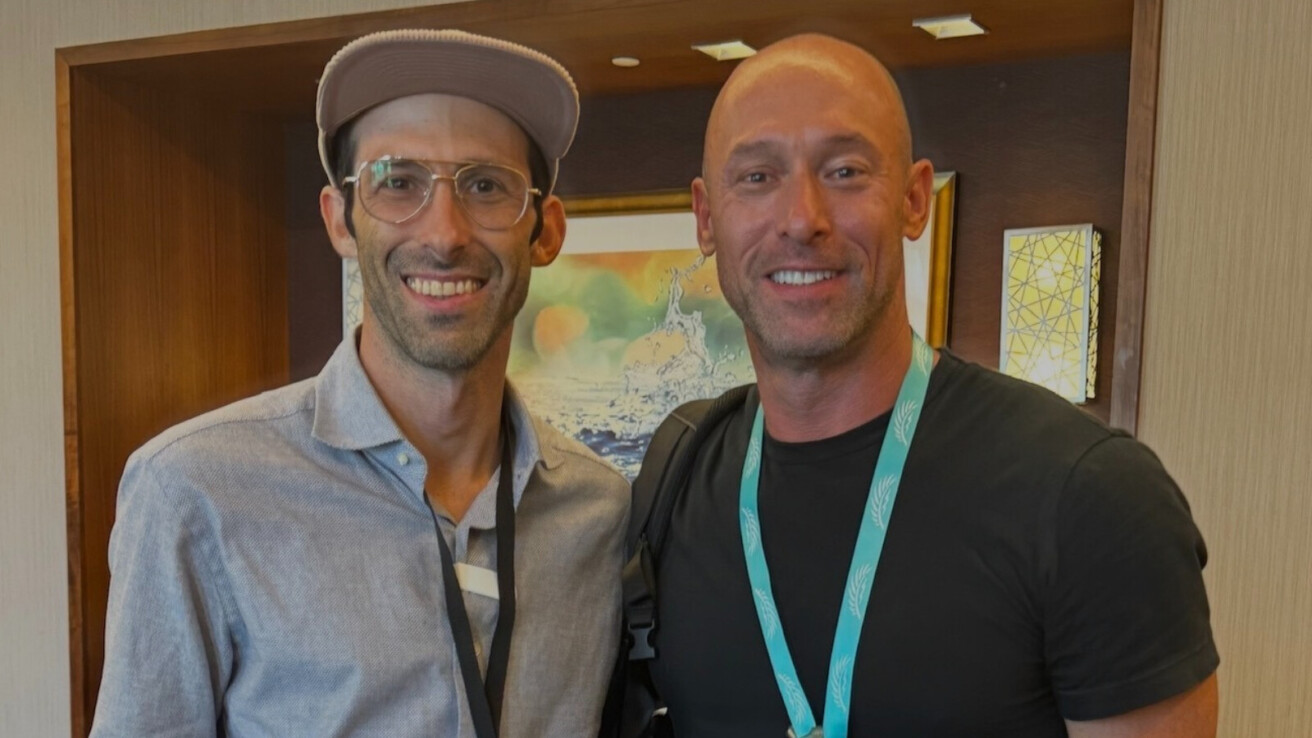
Not a tracker. Not a smartwatch. Not because I’m under house arrest. A small device that vibrates. And I want to tell you why, because I just spent an hour on the phone with the guy who invented it, and I came away thinking about some things very differently.
His name is Dr. David Rabin. He’s a psychiatrist and neuroscientist. He spent years treating veterans with severe PTSD before he built Apollo Neuro, the wearable I’m talking about. I was skeptical when I first got my hands on one a few years back. I’m not a biohacker. I don’t have a wall of supplements. I don’t listen to three and a half hours of podcasts about my nervous system every morning.
But I am a guy who struggles with anxiety, stress, sleep, compulsive behaviors and puts a lot of pressure on himself and I’m always looking for ways to feel better.
Here’s what I’ve learned, and what I think matters for you too.
New to Midlife Male? Sign Up Now for Free
1. Sleep medication is a trade, not a fix.
Ambien gives you more time in bed. It doesn’t give you better sleep. Dave told me the benzo family, the stuff doctors hand out for sleep without much explanation, increases dementia risk and actually wrecks your deep and REM sleep, the stuff that matters most. He’s had patients sleep-eat an entire refrigerator and not remember a bite. Sleep-drive and get a DUI. That’s not a side effect list you hear at the pharmacy counter.
I’m not anti-medicine. I’m pro-knowing what you’re trading.
2. It’s not just for calming down. It works the other way too.
I asked Dave about the 3 o’clock crash. The afternoon where I’m not as sharp, not as aggressive, not as on as I used to be in my 30s. He told me Apollo isn’t just a down-regulator, it’s a modulator. It can dial energy and focus up just as easily as it dials stress down. There’s a vibe for that espresso-shot feeling before you lift. There’s one for walking into a presentation with clarity instead of noise.
Most of us think about recovery tools as the thing you reach for when you’re wound up. Turns out the same nervous system that needs calming also needs activating. We just don’t talk about that side of it.
3. It’s not a crutch. It’s training wheels you eventually don’t need.
I asked him straight up, can this become addictive? He said no, and explained why in a way that stuck with me. The body learns by association. Every time you pair a feeling of safety with an experience, you’re teaching your nervous system to find that state on its own, more easily, more often. The whole point of the tool is that it leaves you better off whenever you stop using it. That’s the opposite of how a crutch works.
That distinction matters to me. I don’t want more things in my life I’m dependent on. I want fewer.
4. Stress is quietly running more of our lives than we admit.
Dave told me over 50% of infertility in this country isn’t biological. It’s stress and anxiety. Not age. Not something wrong with you. Stress. We don’t talk about that nearly enough with men in our age range who are dealing with marriages, families, and the pressure of trying to do it all.
We treat stress like an inconvenience. It’s actually running the show in places we’d never expect, fertility, performance, recovery, mood. All of it.
5. Fix your sleep first. Everything else gets easier.
Here’s the order of operations Dave gave me: fix sleep, and 25 to 50% of your other problems start to improve as a side effect. Not because sleep is magic. Because when you’re chronically stressed, your body is literally in a state that resists change. You can’t build new habits — even good ones — on top of a nervous system that’s stuck in fight-or-flight. The order matters. Sleep first. Everything else stacks on top of that.
That’s why I’ve started wearing it at various times during the day and night now, not just at bedtime. Twenty-one days, that’s the number he gave me to retrain a circadian rhythm. I’m in it right now.
Here’s the part I keep coming back to, though. Somewhere in the conversation I told Dave it feels like I have a secret with this thing on my ankle. Something that’s with me, supporting me, that nobody else knows about. He laughed and said a lot of people describe it exactly that way, a secret weapon, an ace up your sleeve (or in this case, on your ankle).
The difference here is that I don’t keep secrets. I share what I use, learn and try with all of you. I think that’s what a lot of us are actually looking for in midlife. Real information and insight. Not another app. Not another wearable cluttering up our wrist. Something quiet, in our corner, helping us show up a little better, for our families, our work, our own sense of who we’re becoming.
I don’t need the science to be perfect for me to know how I feel when I use it. I feel better. As someone who runs hot, who goes hard in every direction — physically, financially, emotionally, what I’ve needed isn’t more “go.” It’s a way to come back down, get focused, and string more good days together.
More good days than bad ones. And finding the quiet tools that help you get there. If you’re interested in Apollo Neuro, get yours here.
In Health,
Greg Scheinman
Founder, Midlife Male
Husband. Father. Entrepreneur. Coach.
Follow me on LinkedIn, and Instagram
Join 50,000+ driven men over 40 getting free weekly advice on maximizing their health, wealth, and fulfillment in midlife. Subscribe here.