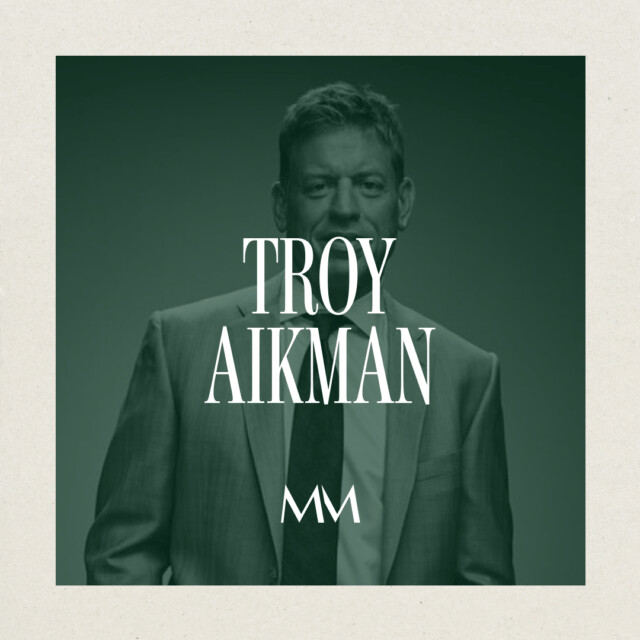




This week I was on a podcast called World’s Greatest Dad. It’s hosted by Ali Khan from the Food Network, who I interviewed last year. Unfortunately, this does not mean I’m suddenly part of an exclusive club of other “Greatest Dads” nominated by their families. Far from it. If I’m lucky, I’ll get a T-shirt.
We had a terrific conversation that covered fatherhood and a variety of topics, but what stuck with me is this notion of all of us trying to be the “World’s Greatest Dad,” and how so many of us end up talking about how we’d like to parent, rather than how we actually parent, me included.
New to Midlife Male? Sign Up Now for Free
Case in point:
As I’m appearing on World’s Greatest Dad discussing my parenting philosophy, and talking about standards and expectations and responsibility, real life is happening at the exact same time in my own house and it flies directly in the face of what I was saying.

While Khan’s team is reposting clips about the “Scheinman Family Scholarship” I talked about, how I’ll pay for college but our boys have to have a 3.0 minimum GPA and they have to exercise, stay in good shape, and they have to carry a job to earn some money and responsibility while they’re in school, I’m in my kitchen having a very real, emotional conversation with my wife about whether our son really needs to have a job this last semester of college (honoring the scholarship), or whether his time would be better spent taking a certified financial planner class, getting ahead, and looking for his, quote unquote, real job, if he wants to continue to stay and live in Colorado after graduation.
And as we were digging our heels in, things got heated, because while I talk about being objective and understanding about where your spouse is coming from on other podcasts, in the real world, I get emotional.
Objectively, yes, I understand it’s my wife’s job, as a much more nurturing individual than I am, to jump in if I’m being overbearing or unreasonable. I totally get that.
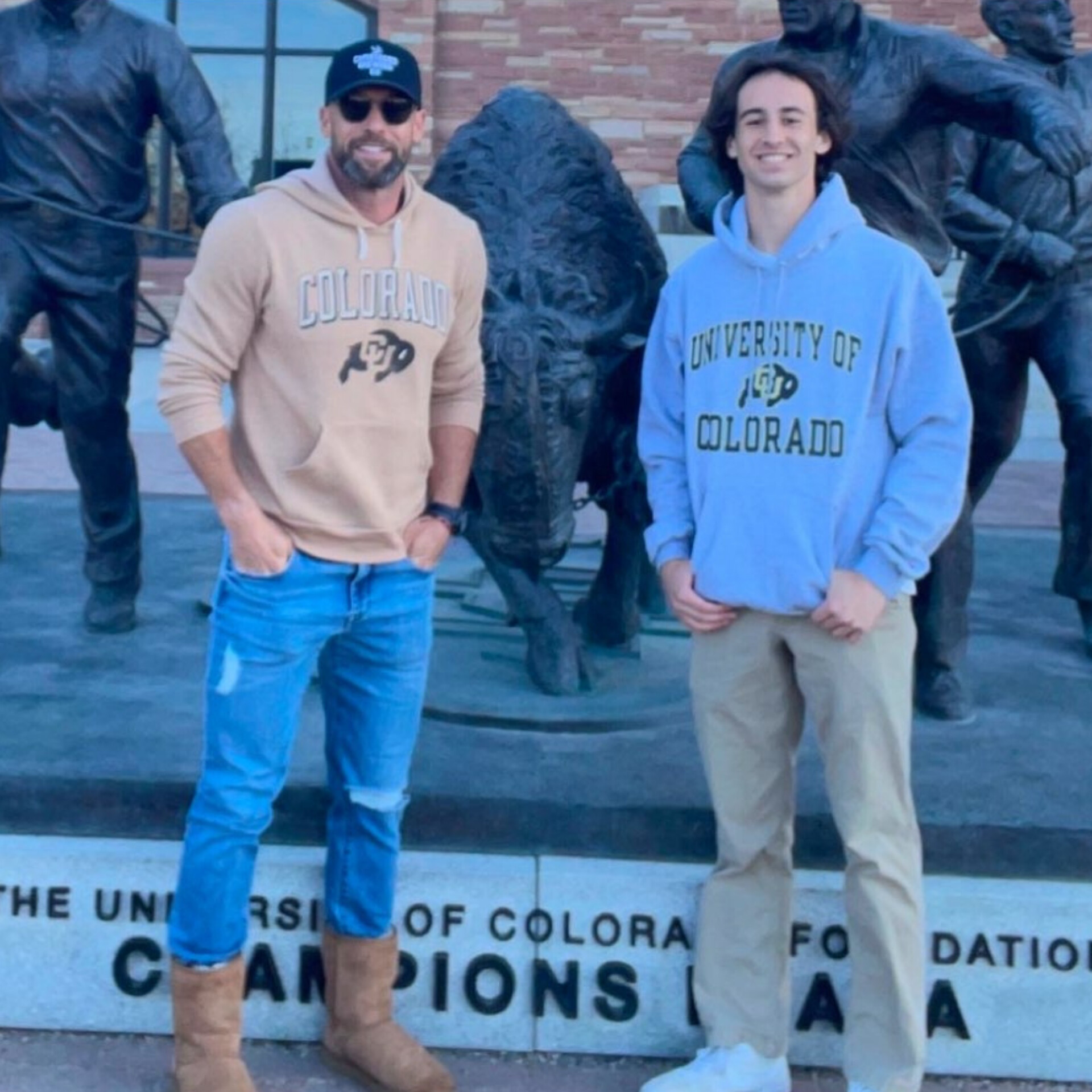
But when she said, “I don’t think he needs to have some menial job while he would be taking his CFP class and getting ahead,” I have to be honest, I lost it.
Because I’ve worked hard, nonstop, my whole life. To me, there’s nothing menial about ANY job.
When you have to wake up, get dressed, show up, clock in, work hard, listen to a boss, deal with customers and do it all with a smile on your face or you don’t get paid, that’s not a menial anything. That’s work. That’s life. That’s a lesson that never ends.
And if you say you’re going to do something for all eight semesters of college, you don’t go back on your word in the last semester just because it’s not convenient. You didn’t commit to seven out of eight semesters. You committed to working for all of them and you should honor that.
Like I said, things got heated. I’m sure I said things I shouldn’t have. But my wife and I are coming from very different places here while wanting the same thing: what’s best for our son.
To this day the best job I ever had was working in a restaurant. I remember working at Millie’s Place, a restaurant and bar on Long Island. During the summer after I graduated college and was back in NY looking for my first “real job”, I was a lifeguard at a children’s day camp, and then around four o’clock in the afternoon, when I got off from that job, I would change clothes in the parking lot, put on my black pants and my white tuxedo shirt, drive right over to Millie’s, and work at the restaurant.
My family knew Millie the owner, hence the name, and she told Hector the manager to give me a job. This is the very essence of entitlement I learned later (and the value of connections). Hector was a strong, prideful man and he didn’t want to just give a job to some cocky college kid who’s going to leave as soon as he gets something better. I get that now as well.
So, he stuck me in the back of the house, where Spanish was the main language and I was the outsider. Turns out that I loved it. I soaked it all in. I learned the difference between the front of the house and the back of the house. The food runners, the dishwashers, the sous chefs, and also the maitre d’s, the owners, and most importantly, the customers who came in. What worked, what didn’t work, with how you greeted and treated them. I loved the guys, I loved Hector. I worked my way from back of the house to server, to bartender. To this day whenever we go back to Long Island I still go in and see him and we all have dinner together.
He’s gotten to know my sons and I’ve gotten to know his family. At 53, when I now get the chance to guest-bartend with Troy Aikman, I’m still thinking about Millie’s Place and what it taught me.
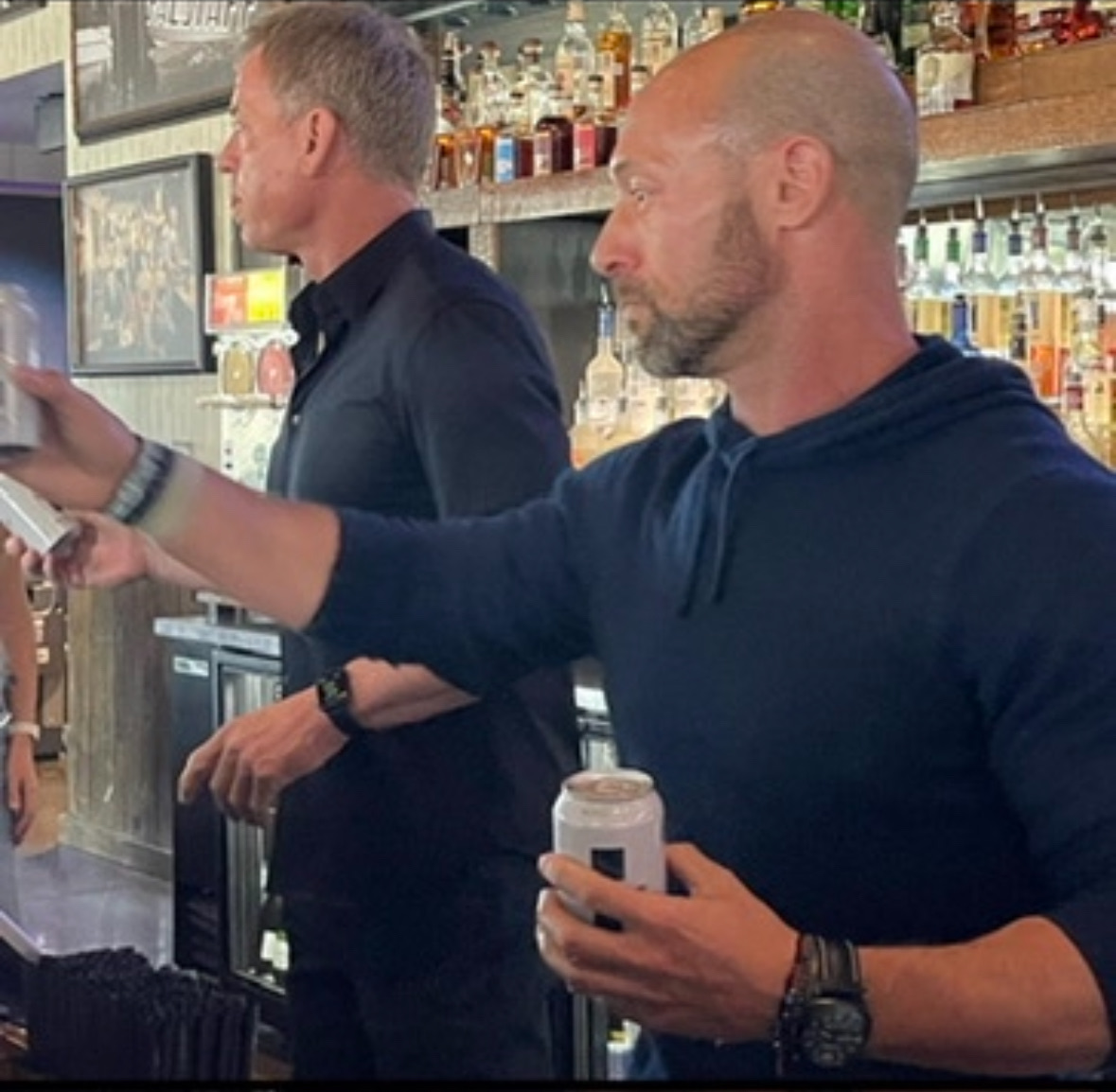
I honestly think everyone should work in a restaurant at some point in their life.
Which is why, if I’m being really honest, my kids have been enabled, despite what I say on podcasts. They have been entitled in ways that they didn’t earn and didn’t choose. They’ve inherited our lifestyle to a degree. And both things can be true.
That’s where this gets hard, because right now it’s not about the rules. It’s about judgment. It’s about the better decision.
Stick with the scholarship that I’ve talked about publicly and openly as an ironclad agreement between father and son? Or not?
Is it better to stick to the policy, or is the better decision to recognize that this moment might be different? Is it better for him to work another job, or is it better for him to invest in getting ready for the next chapter? And what does that cost? Emotionally, spiritually, financially.
It’s uncomfortable for me, especially when you’ve already said something publicly that sounds a lot cleaner and a lot more certain than the reality you’re now facing.
So I’m standing there in my kitchen and I’m thinking, do I even repost this podcast clip when I might be making a very different call in my own house with my own kids right at this very moment? Does that reek of galactic hypocrisy? Or does it just make me a dad who’s actually paying attention to the situation and the circumstance?
And look, there’s always this part that I don’t talk about as much. It sits with me and lives with me. My dad was 47 when he died, so whether I want to or not, legacy is always in the room with me. I think about what he gave me, what he didn’t get a chance to give me, what I wish I could still ask him, and I think about what my boys will say about me someday.
If they were giving my eulogy (maybe that’s a bit morbid, but I go there too often) my kids aren’t going to talk about the rules I had and what policies I enforced, but how I showed up, how I handled the tough calls.
So yeah, maybe I said one thing publicly on a podcast last weekend and I’m doing something slightly different this week. I’m okay with that. I think we’re all a little hypocritical.
And if I’m a little bit of this and a little bit of that, what I know wholeheartedly is that I’m a man who’s still trying to get it right.
And that’s a story that matters to me more than any mug or T-shirt that says I’m the world’s greatest anything.
In Health,

midlifemalmidli
femalemidlif
Greg Scheinman
Founder, Midlife Male
53. Husband. Father. Entrepreneur. Coach. Follow me on LinkedIn, and Instagram Buy My Book Here /Book Coaching/Speaking Heremidlifemalemidlifemalemidlife
midlifemalemidlifemalemidlifemale
midlifemal
Join 50,000+ driven men over 40 getting free weekly advice on maximizing their health, wealth, and fulfillment in midlife. Subscribe here.